Monday, November 5, 2012

What Type of Bird Are You??


I’m wrapping up the fourth week of a five week on-line course on avian behavior. For the past several weeks, I have studied territorial behavior among mallard and goldeneye ducks, the courtship/territorial relationships between male and female red-winged blackbirds and currently, the mating rituals of birds of paradise. What I have learned throughout the past several weeks is that I know so very little about birds and how they behave.

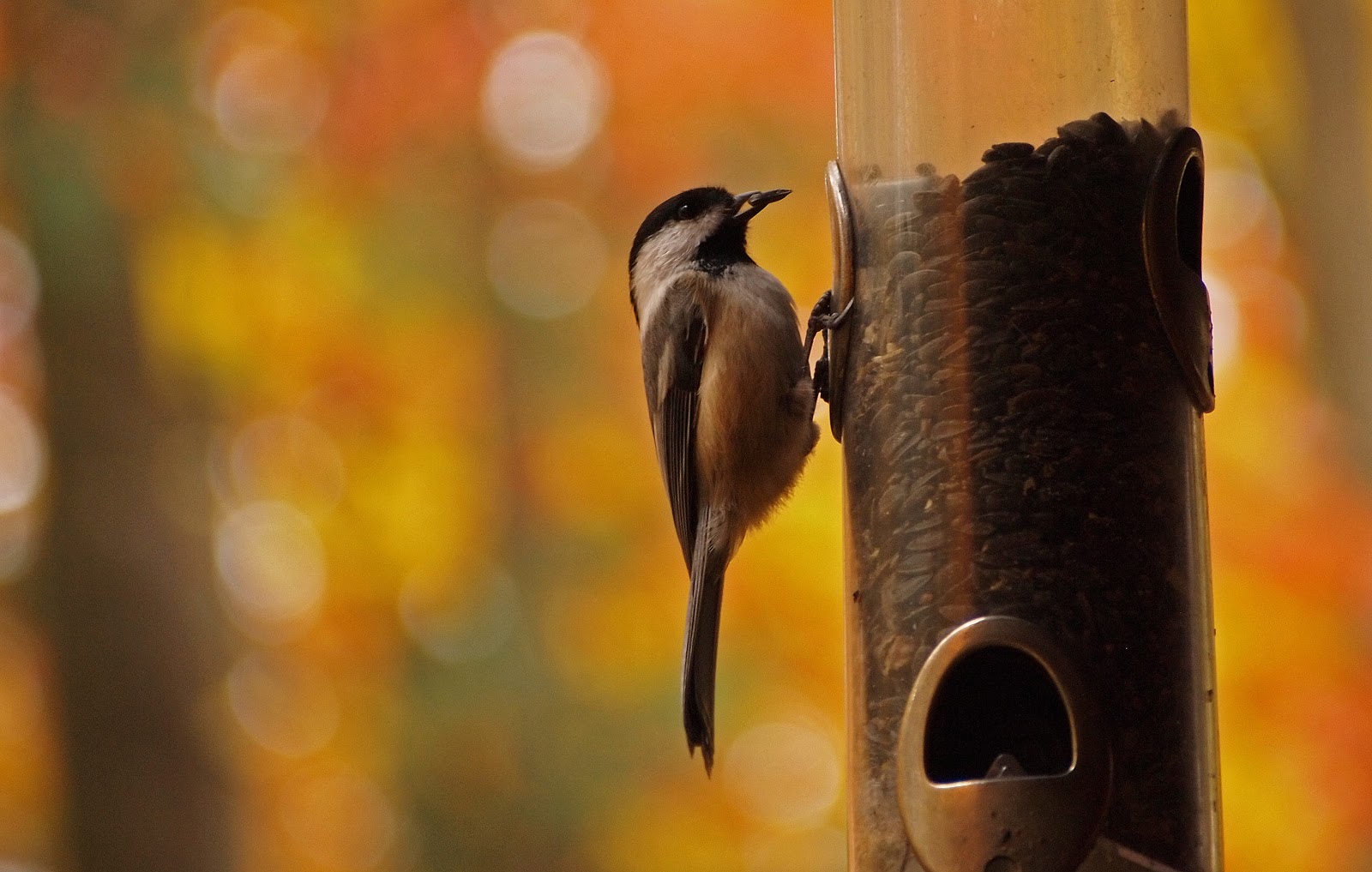
One of my difficulties came from being unable to identify a particular species of bird. For the longest time, I thought I had only chickadees and white-breasted nuthatches at my backyard feeders. From the observing techniques learned in week one and two, I realized that I actually had two species of nuthatches, the larger white-breasted nuthatch AND the smaller red-breasted nuthatch. I had not noticed the different color bands on the red-breasted nuthatch’s head nor the pale red chest feathers and summarily called all the small black and white birds, chickadees.

I was familiar with the term sexual dimorphism the scientific term for differences in size, structure and appearance between male and female birds of the same species; a common example being male mallard ducks with their bright green heads and the female mallards that are shades of brown. But what I hadn’t realized until this class is that some birds’ coloration and feather patterns change throughout their lives and in some instances seasonally change.

There are also examples of male birds that hide certain physical characteristics dependent upon the situation. During the mating season, the male red-winged blackbird will display their bright red/yellow wings as a sign of dominance alerting other males to stay out of his territory. However, once mating season has passed the males will gather in large flocks. To avoid fighting within these groups, the males will hide their dominant red/yellow feathers. Never knew that; I just thought there were a solid black colored blackbird and the red-winged variety.

What I have learned from this class will help me when I participate in Project FeederWatch that begins this coming Monday. A program of the Cornell University Lab of Ornithology, the FeederWatch information gathered by me and other volunteers will help bird researchers identify patterns of behavior and winter homes of North American birds. Up to now, all of my identification work has been confined to class videos where I can watch the videos over and over until I get the answers correct. On Monday, I will see how much I have learned.

Friday, November 2, 2012

Living By The Clock


This has been a very long week. That sounds funny as I write this for how can a period of time vary from week to week if the same number of minutes and seconds apply? The passage of time in modern society has become a linear concept that can be readily quantified and documented. The descriptors of long and short are irrelevant emotions.
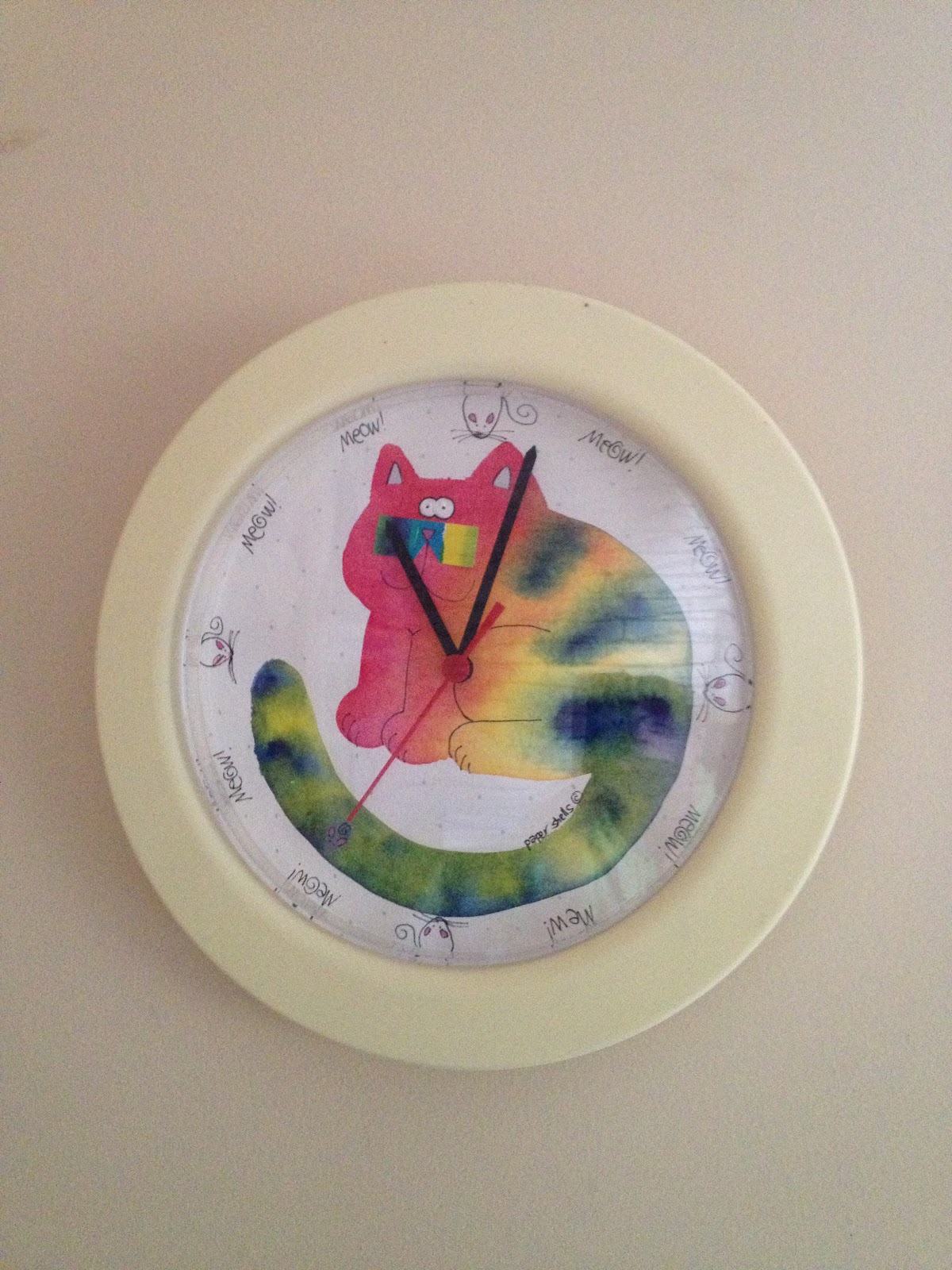
Like most people, I manage my day by the clock. I eat, go to bed, even, write this post at the same time every day, regardless of whether I am hungry, tired, or creative.  In my professional life, I lived by the clock and day planner. My work day was scheduled to the minute; initially in order to bill clients for my services and later to ensure that I never missed a deadline.
Away from the business world for more than a year, the principles of time have lost their meaning and I often find myself floundering. Without a deadline, a set work day, or even an outside imposed direction, the satisfaction that comes from crossing out tasks on the to-do list has disappeared. I’ve become anxious that I am not living my life to its fullest. Nothing can be further from the truth for each day is filled with tasks that are essential in maintaining me, my home and my community. What is now missing is the outward acknowledgement; that pat on the back that I continually received from co-workers, friends and family.
I am fully grasping the sense of loss that experts say happens when one transitions into retirement or extended unemployment. The comfort that comes from decades of being part of the working community is suddenly torn out of your routine and you are left to figure out how to fill that void. I have filled some of that loss through writing this blog, photography and taking classes but on days like today, it isn’t enough. As much as I love to write, learn and photograph; these are solitary pursuits. We humans are social animals that require each other as much as food, water and air.  My cats are fine companions but they cannot replace good conversation and a hearty shared laugh.
As I muddled through this period of change, I am increasingly learning that there is more to life than clocks or being constantly busy. The truth is that most projects are not as important as I often deem they are. That report that took me away from family gatherings, kept me awake for nights on end, is now decomposing, unread in the back of the file cabinet. Those dust bunnies will return no matter how many times I sweep the floor. What is important are the relationships I have with people I know and those I will come to know. Life isn’t about possessions or even time management. It is being fully engaged in being who you are and giving of yourself to others.

Thursday, November 1, 2012

Twigs and Leaves


The high winds and rain have begun to subside after two days of Sandy’s tantrum. There are few leaves remaining on the trees now; leaving skeletons of branches standing against a drab gray sky.

For the first time this fall, I can finally see the handiwork of the neighborhood squirrels. I love watching the gray squirrels scurry up and down the trees, carrying leaves to build their winter homes. I share their frustration when finally reaching the top branches a gust of wind knocks the leaf out of their mouths, flittering back to the ground. But squirrels are a persistent and determined species and soon they are back climbing up the trunk resuming their task.

When you look at a squirrel’s winter home, you can’t help but wonder how that mishmash of leaves and twigs can possibly survive during the long cold months. Oftentimes, you find these nests hanging off the farthest ends of branches hovering over busy streets and sidewalks. Other nests are tightly built around tangled pine branches, hidden from view. In either case, the nests are only temporary. By spring, most squirrels abandon these winter abodes in search of a fresher, cooler summer residence.

The winter I cared for three orphaned squirrels, I had provided them a wooden nest box complete with loose straw for bedding. When spring arrived and the three had moved on to lives of their own. I pulled down the box to clean. The nest box was large, 12”x12”x12”. Opening the cover, that spacious box had been thickly packed with broken down dried leaves, straw and fur. The squirrels had created a cocoon just big enough to hold them, allowing the natural insulation and body heat to keep them warm and protected over the many months of snow and cold.

I’m guessing that if I were to peek inside one of these treetop squirrel nest, I would find a similar environment. The outside tangle of broken twigs and leaves serves to secure the nest to the tree. It is not intended to be beautiful but functional. Likewise, the interior of densely matted vegetation is spartan but warm.

I am impressed with the ingenuity of these animals. How did they learn to construct such durable nests? Was this knowledge passed from one generation to another or instinctual? My own experience with wintering over young squirrels leans towards instinct, but I provided them with the nest box. Could they have built an entire nest without my help?  I don’t know the answers but one thing is certain. Squirrels, like all living creatures, have the internal drive to survive, learning and adapting to the ever changing environment in which they live. For the grey squirrels of North America, it is the ability to construct shelters that are safe, strong and warm against the elements of winter.